The State of Marine Biodiversity: Key Statistics and Ocean Conservation Data (2026)
Accurate data drives modern environmental policy, scientific research, and conservation advocacy. Journalists, academic researchers, and students frequently require consolidated metrics on marine ecosystems, global fisheries, climate stress indicators, and habitat loss.
This reference document compiles verified, peer-reviewed statistics and data points regarding the global state of marine biodiversity, serving as an open citation resource for researchers and content creators.
1. Global Marine Species & Taxonomic Baseline
Understanding the scale of marine life requires examining current taxonomic registries and discovery rates:
• Total Described Marine Species: Approximately 240,000 to 250,000 species are formally described in the World Register of Marine Species (WoRMS).
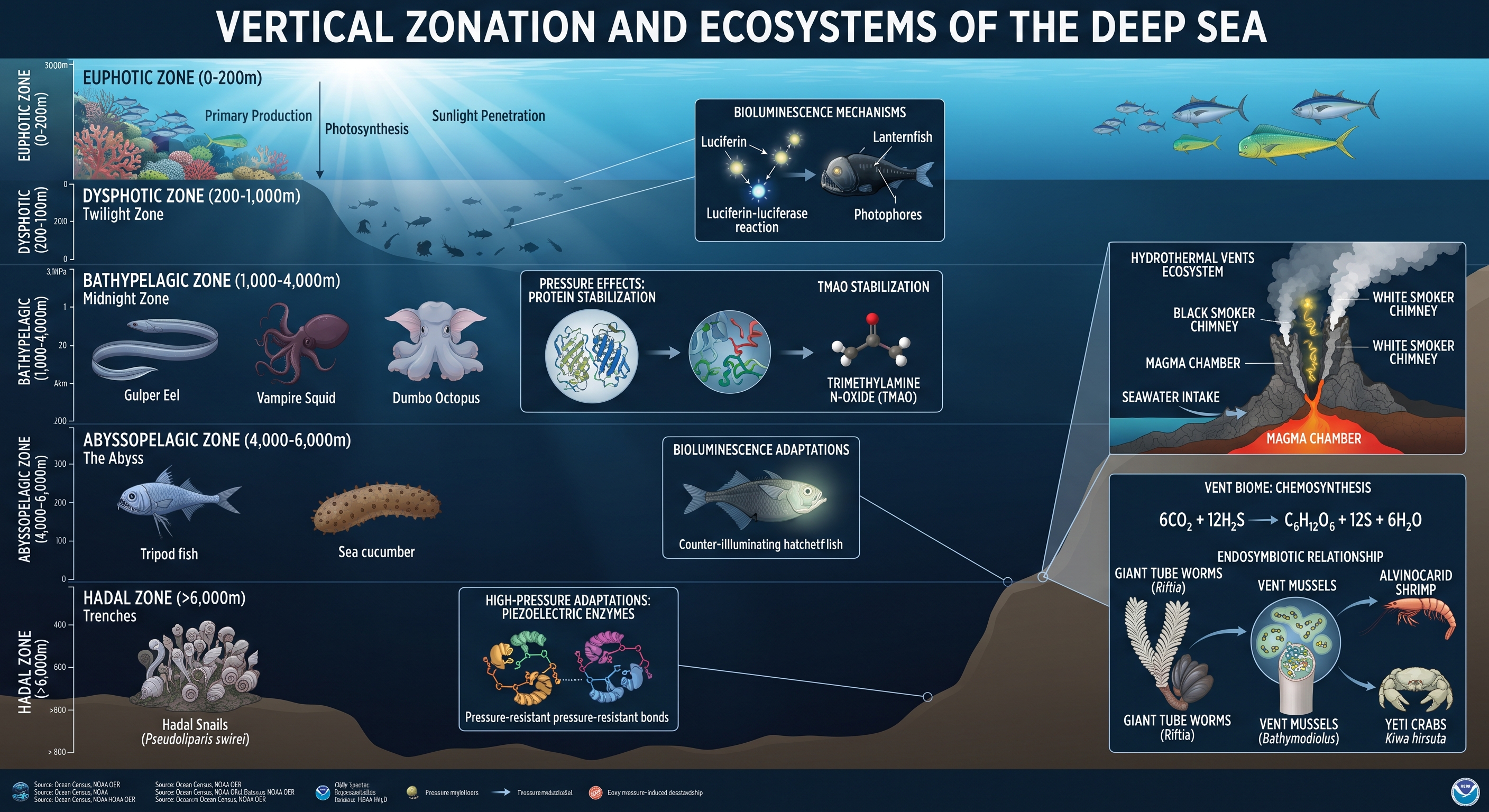
• Estimated Undescribed Species: Marine taxonomists estimate that between 700,000 and 1 million marine species remain undiscovered or uncataloged, particularly within the deep-sea benthos and meiofauna.
• Microbial Diversity: Ocean waters host an estimated 10^30 microbial cells, driving global biogeochemical cycles and carbon sequestration.
2. Coral Reef Ecosystems and Thermal Stress
Coral reefs cover less than 0.1 percent of the ocean floor but support roughly 25 percent of all marine species. They represent the most vulnerable marine ecosystem to anthropogenic climate change:
• Global Bleaching Events: Comprehensive global monitoring by NOAA Coral Reef Watch indicates that over 80 percent of coral reef regions experienced thermal stress levels capable of causing mass bleaching.
• Shallow-Water Coral Decline: Historical assessments indicate a global loss of roughly 30 percent to 50 percent of live coral cover over the past four decades due to rising sea surface temperatures, ocean acidification, and coastal runoff.
3. Fisheries, Overexploitation, and Stock Status
Global commercial fisheries sustain billions of people but face severe sustainability challenges tracked by the Food and Agriculture Organization (FAO):
• Overfished Stocks: According to FAO marine fisheries assessments, approximately 35 percent of assessed global fish stocks are currently classified as biologically unsustainable or overfished.
• Maxustainably Fished Stocks: Roughly 57 percent to 60 percent of stocks are fished at maximum sustainable yield limits, leaving very little buffer for environmental shocks.
• Bycatch Impact: Unintentional capture (bycatch) accounts for an estimated 10 percent to 20 percent of global marine catches, disproportionately impacting elasmobranchs (sharks and rays), sea turtles, and marine mammals.
4. Ocean Acidification and Chemical Metrics
The absorption of anthropogenic carbon dioxide emissions has radically altered basic ocean chemistry:
• pH Decline: Average surface ocean pH has dropped by approximately 0.1 units since the beginning of the Industrial Revolution, representing a roughly 30 percent increase in acidity (hydrogen ion concentration).
• Aragonite Saturation State: Declining carbonate ion saturation states heavily compromise calcifying organisms, including pteropods, coccolithophores, and scleractinian corals, impairing their ability to build calcium carbonate skeletons.
5. Marine Pollution: Plastics and Debris
Land-based waste streams continuously alter coastal and pelagic habitats:
• Plastic Input Volumes: Millions of metric tons of plastic waste enter the marine environment annually, fragmenting into microplastics (under 5 mm) and nanoplastics.
• Pelagic Distribution: Microplastics have been documented across all marine strata, from surface neuston layers down to abyssal sediment cores in the Mariana Trench.
Citation and Data Usage Policy
Researchers and writers are welcome to reference, cite, or excerpt statistics from this dataset for academic papers, articles, or environmental reports, provided direct attribution is linked back to primary institutional sources (e.g., WoRMS, NOAA, FAO, IPCC).
The State of Marine Biodiversity: Key Statistics and Ocean Conservation Data