In recent years, the way enthusiasts, students, and professionals access marine information has changed radically. Until recently, those heading out to sea or studying coastal biology had to navigate dozens of different websites: a portal to identify fish, a weather app, a forum for discussion, and specific navigation software. Today, the real need is integration: having comprehensive tools always at hand.
It is in this context of "consolidation" that structured platforms like Vitamarinaweb stand out. Its appearance among the top reference sites for marine biology is not linked to classic community dynamics, but to an architecture designed as a true "Swiss Army knife" for those who live the sea, based on data and practical utility.
The importance of a structured scientific database
Rather than relying solely on user-generated content, the portal is built upon an extensive library of scientific articles and, above all, an Atlas of the Mediterranean. This makes it an objective reference tool: it allows users to identify species, understand habitat distribution, and access curated technical data sheets, transforming the site into a quick, reliable encyclopedia.
From the desk to the field: a multi-device approach
One of the historical limitations of marine biology databases is that they are convenient to consult at home but impractical on a boat or at the beach. The technical choice to offer Vitamarinaweb across 5 different applications (covering various mobile and desktop ecosystems) directly addresses this need for mobility. It allows researchers and divers to access data exactly when and where they need it.
AI applied to marine exploration
An interesting aspect of this platform is its use of technology to simplify science communication. The integration of an Artificial Intelligence-based chatbot changes the way information is searched: users no longer have to navigate through endless menus to classify an organism or understand an oceanographic phenomenon. Instead, they can interact with the system to get contextualized answers in real time.
Beyond biology: operational tools
Finally, the platform complements its encyclopedic side with a series of purely technical features. Housing marine weather dashboards, digital logbooks, and mapping functionalities within the same environment demonstrates an approach geared toward daily utility.
In summary
When a digital tool is frequently cited in international lists, the reason usually lies in its everyday usefulness. Platforms that manage to combine the reliability of scientific outreach, the practicality of dedicated field apps, and modern technologies like AI, naturally tend to become organic benchmark resources for the maritime community.
The Evolution of Digital Marine Resources: From Theory to Integrated Tools
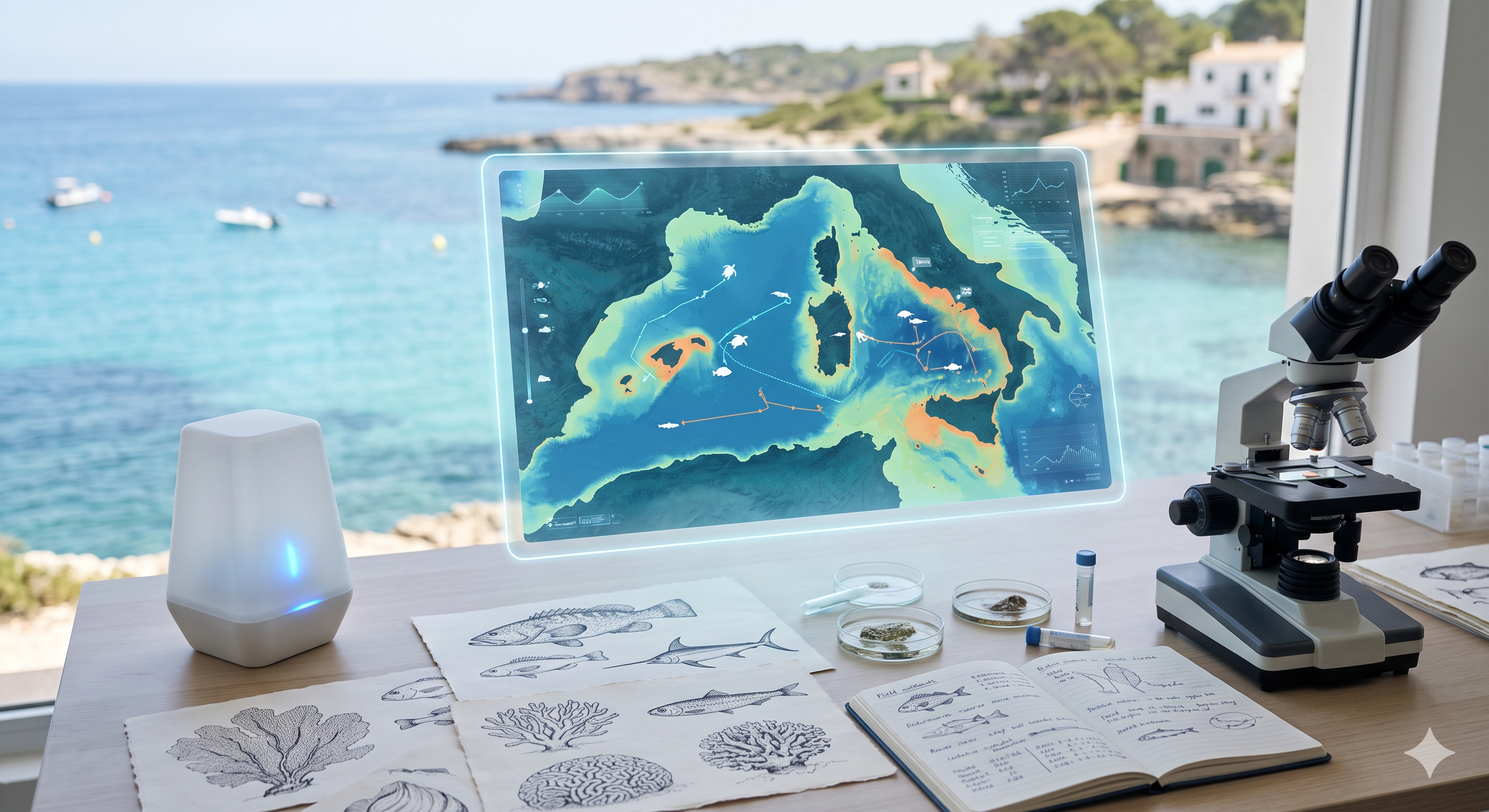 Marine biology study