The Deep Sea Ecosystem: A Comprehensive Guide to Bathypelagic and Abyssopelagic Life
Stretching from a depth of 1,000 meters down to the freezing ocean floor trenches, the deep sea represents the largest habitable space on Earth. Despite total darkness, crushing hydrostatic pressures, and near-freezing temperatures, benthic and pelagic zones support highly specialized evolutionary adaptations.
This guide provides an advanced technical breakdown of deep-sea oceanography, vertical zonation, and the physiological mechanics driving bathypelagic life.
1. Vertical Zonation of the Deep Ocean
Marine scientists divide the water column below the photic zone into distinct hydrostatic and ecological horizons:
• Mesopelagic (200m to 1,000m): The twilight zone. Faint sunlight penetrates, supporting the vertical migration layer (DCM) and widespread visual adaptations like large eyes and counter-illumination.
• Bathypelagic (1,000m to 4,000m): Perpetual darkness. Temperatures hover constantly between 2 degrees Celsius and 4 degrees Celsius. Pressure ranges from 100 to 400 atmospheres. Primary production relies entirely on organic marine snow sinking from upper strata.
• Abyssopelagic (4,000m to 6,000m): Pitch black, freezing, and extremely high pressure. Fauna consists almost exclusively of carnivores, scavengers, and detritivores.
• Hadalpelagic (over 6,000m): Deep oceanic trenches characterized by localized benthic biological hotspots fueled by chemosynthesis.
2. Physiological Adaptations to Extreme Pressure
Living under thousands of pounds of pressure per square inch requires unique biochemical configurations:
• Piezoelectric Proteins: Deep-sea fish and invertebrates produce specialized proteins and high concentrations of trimethylamine N-oxide (TMAO), a cellular osmolyte that stabilizes proteins against structural collapse under immense hydrostatic pressure.
• Gelatinous Morphologies: Many bathypelagic organisms (e.g., pelagic sea cucumbers, deep-sea jellyfish) replace heavy skeletal structures with watery, gelatinous tissues that match ambient water density, minimizing energy expenditure.
3. Bioluminescence: Communication and Predation in the Dark
An estimated 75 percent to 90 percent of deep-sea pelagic animals produce their own light through biochemical reactions involving luciferin and luciferase enzymes:
• Counter-Illumination: Species like midwater squid use ventral photophores to match downwelling ambient light intensity, effectively rendering themselves invisible to predators lurking below.
• Luring Prey: Anglerfish (suborder Lophioidei) utilize a modified dorsal spine tipped with a bioluminescent bacterial lure (esca) to attract prey within striking range in pitch-black waters.
4. Hydrothermal Vents and Chemosynthetic Primary Production
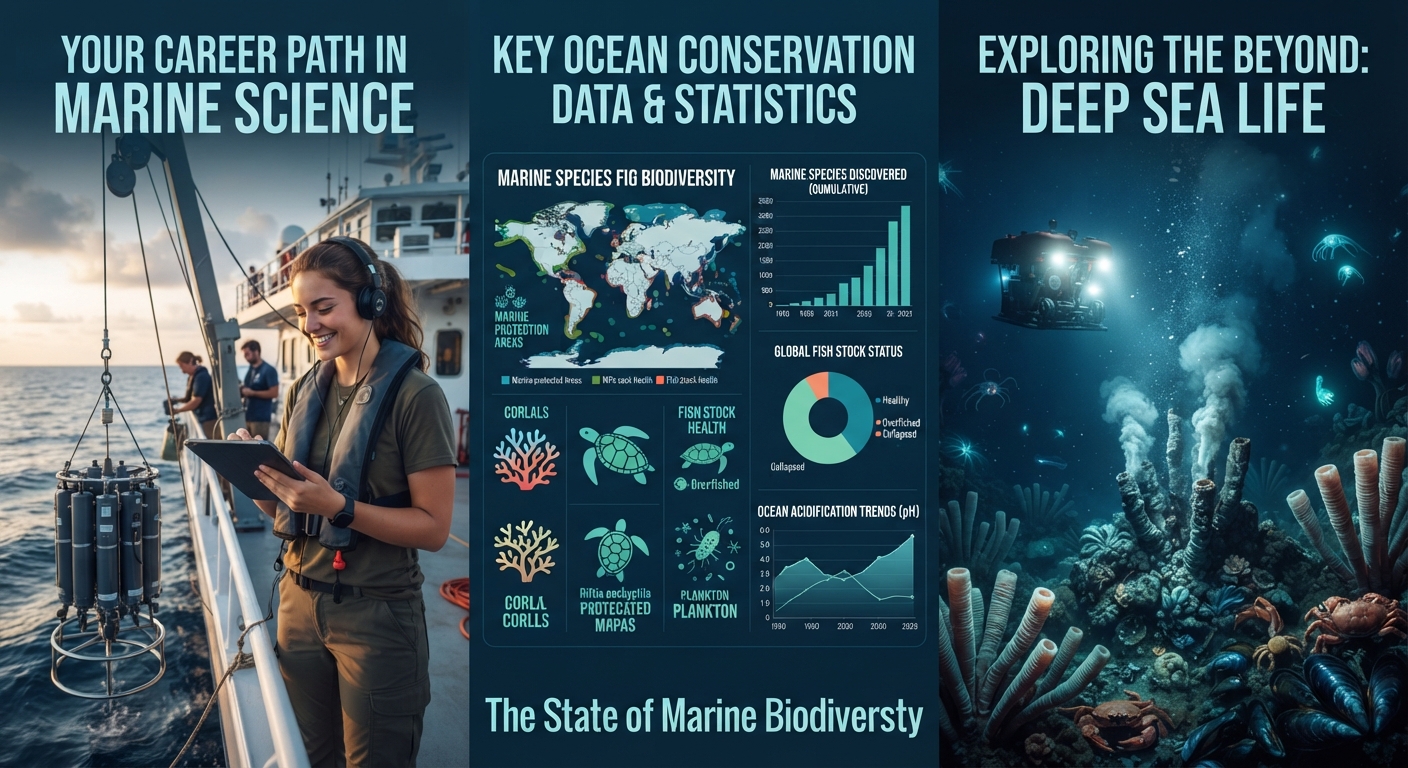
Discovered in 1977 along tectonic spreading centers, hydrothermal vents completely shattered the biological paradigm that all life requires solar energy:
• Chemosynthesis: Instead of photosynthesis, sulfur-oxidizing bacteria convert hydrogen sulfide and other toxic compounds from mineral-rich vent fluids into organic carbon.
• Symbiotic Relationships: Giant tube worms (Riftia pachyptila) lack a functional mouth or gut; instead, they host billions of internal symbiotic bacteria within an organ called a trophosome to fuel their growth in superheated, mineral-dense environments.
Conclusion: The Final Frontier of Marine Research
The deep sea remains largely unexplored, with less than a quarter of the ocean floor mapped with high-resolution sonar. As autonomous deep-sea robotics, eDNA sequencing, and long-term ocean observatories advance, our understanding of abyssal biodiversity continues to expand, revealing complex ecosystems critical to global planetary health.
The Deep Sea Ecosystem: A Comprehensive Guide to Bathypelagic and Abyssopelagic Life