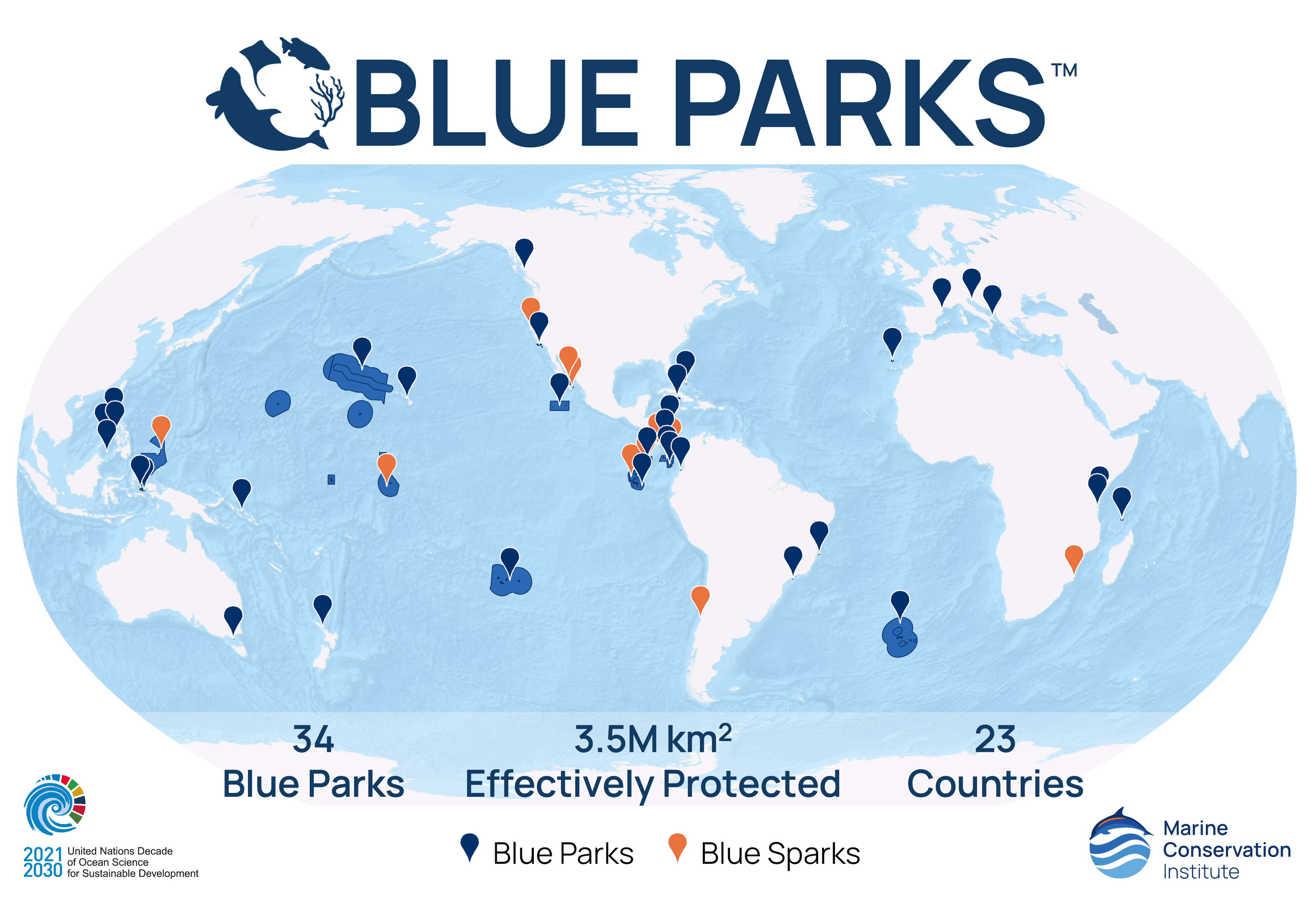
Photo credits:
Photo 1: Brijuni National Park — courtesy of NP Brijuni.
Photo 2: Torre Guaceto Marine Protected Area — photo by Giuseppe Affinito.
The Mediterranean Sea is one of the most biodiverse—and most heavily used—marine regions in the world. Its blue waters teem with life, from ancient seagrass meadows to iconic species like sea turtles and groupers. Yet it is also a sea under pressure from overfishing, habitat loss, pollution, and climate change.
This is a place where true Blue Parks matter. Marine Conservation Institute’s Blue Park Awards recognize marine protected areas (MPAs) that work to revitalize the Mediterranean’s impacted ecosystems—those that meet the Blue Park Standard for Conservation Effectiveness, a science-based benchmark developed to ensure MPAs safeguard biodiversity, as they are intended to. The Standard sets out guidance for MPA design, governance, level of protection, management effectiveness, compliance, and capacity—key ingredients of lasting conservation success.
In the Mediterranean, where many MPAs are not (yet) effectively conserving biodiversity, awarded Blue Parks stand out as proof that strong, well-managed protection is possible and powerful. They are models for success.
1. Réserve Naturelle Marine de Cerbère-Banyuls (France)
On the Côte Vermeille, between the villages of Cerbère and Banyuls-sur-Mer, this small but mighty reserve protects 6.5 km2 of marine habitat, including seagrass meadows, coralligenous reefs, and rocky canyons.
Why it shines:
• Awarded a Silver-level Blue Park Award (2018) for its exceptional management and measurable ecological recovery.
• Its 0.65 km2 no-take zone serves as a refuge where fish populations, like the brown grouper, have rebounded dramatically—from a handful in the 1970s to over 700 today.
• Continuous scientific monitoring and adaptive management make it one of the best-documented conservation success stories in the Mediterranean, and it is now undergoing an expansion to more than double in size.
Cerbère-Banyuls exemplifies the Blue Park Standard’s emphasis on effective, well-enforced protection—showing that even small MPAs can yield biodiversity gains.
2. Area Marina Protetta Torre Guaceto (Italy)
Along Italy’s Adriatic coast, Torre Guaceto protects 22.3 km2 of thriving seagrass meadows, coastal dunes, and wetlands.
Why it shines:
• Combines rigorous protection of marine ecosystems with community engagement and sustainable tourism.
• Local fishers and managers co-developed rules that have promoted both ecological recovery and sustainable fishing.
• Earned Silver-level Blue Park status for its integrated, ecosystem-based management and enduring commitment to conservation excellence.
Torre Guaceto demonstrates another pillar of the Blue Park Standard: community collaboration. When people and nature thrive together, protection lasts.
3. Nacionali Park Brijuni (Croatia)
Off Croatia’s Istrian coast, Brijuni National Park protects 26.5 km2 of seagrass meadows and rocky reef ecosystems around 14 small islands. It is home to bottlenose dolphins, loggerhead turtles, and endemic seagrass species.
Why it shines:
• Awarded a Blue Park (Gold Level) in 2021 for its strong legal protection, effective management, and scientific monitoring program.
• Maintains one of the Mediterranean’s best examples of terrestrial and marine ecosystem connectivity.
• Ongoing education and outreach programs connect park protection and tourism.
Brijuni embodies the Blue Park Standard’s principle of representative protection—safeguarding the diversity of marine ecosystems across ecological gradients, from seagrass meadows to deep reefs.
Why Mediterranean Blue Parks Matter
The Mediterranean is a conservation paradox: nearly 10% of its waters are “protected” on paper, yet fewer than 2% is effectively managed. Blue Parks like Cerbère-Banyuls, Torre Guaceto, and Brijuni prove that rigorous, science-based protection can restore marine life, rebuild fisheries, and strengthen resilience to climate change.
These MPAs are models—demonstrating that the quality of protection matters as much as quantity.
Looking Ahead: Using the Blue Park Standard as a Roadmap
To achieve meaningful ocean protection by 2030, the Mediterranean needs not just more MPAs—but more effective MPAs. The Blue Park Standard for Conservation Effectiveness provides a practical, proven framework for doing just that.
What can be done:
• Adopt the Blue Park Standard as a benchmark for evaluating and improving MPA effectiveness—ensuring consistent, measurable progress.
• Invest in management capacity: Effective MPAs require trained staff, adequate funding, and long-term monitoring that informs management.
• Expand fully protected zones that exclude all extraction and allow ecosystems to fully recover.
• Build resilient networks of MPAs that protect migratory species and connected habitats.
• Engage communities and scientists: Local stewardship and science-based management together drive enduring success.
By aligning with the Blue Park Standard, Mediterranean nations can transform the region’s patchwork of underperforming MPAs into a connected network of thriving, climate-resilient Blue Parks—a living blueprint for the ocean’s recovery.
Conclusion
Cerbère-Banyuls, Torre Guaceto, and Brijuni show what’s possible when marine protection meets scientific rigor, community collaboration, and strong governance. They are proof that the Mediterranean can lead the world in effective marine conservation.
As nations look toward 2030, the question is no longer how much of the ocean we protect—but how well. The Blue Park Standard provides the compass to guide us there.
Links: https://marine-conservation.org/blueparks/
https://marine-conservation.org/blueparks/standard/
Celebrating Marine Champions: Blue Parks in the Mediterranean
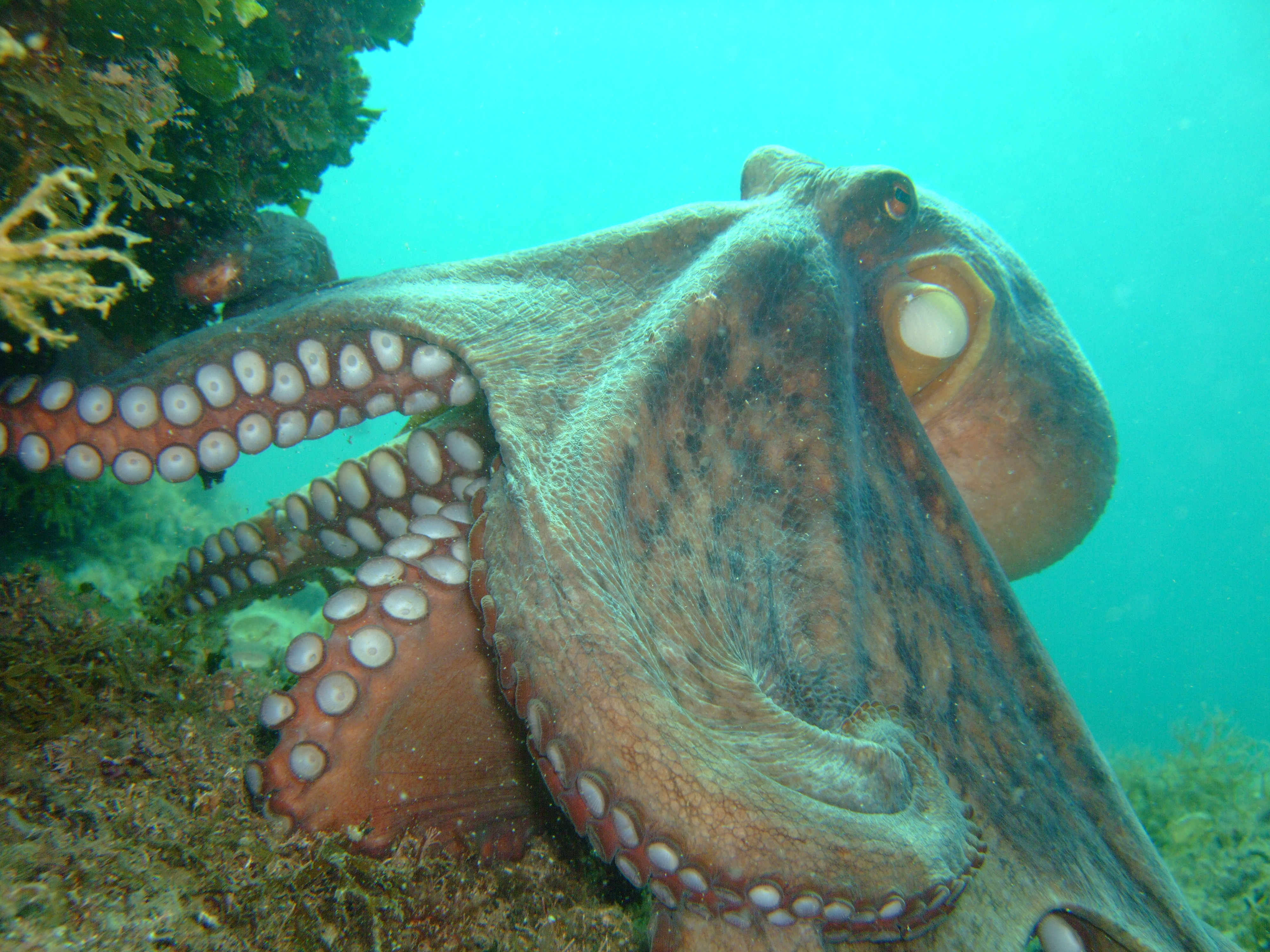 Brijuni_photo_Courtesy_of_NP_Brijuni
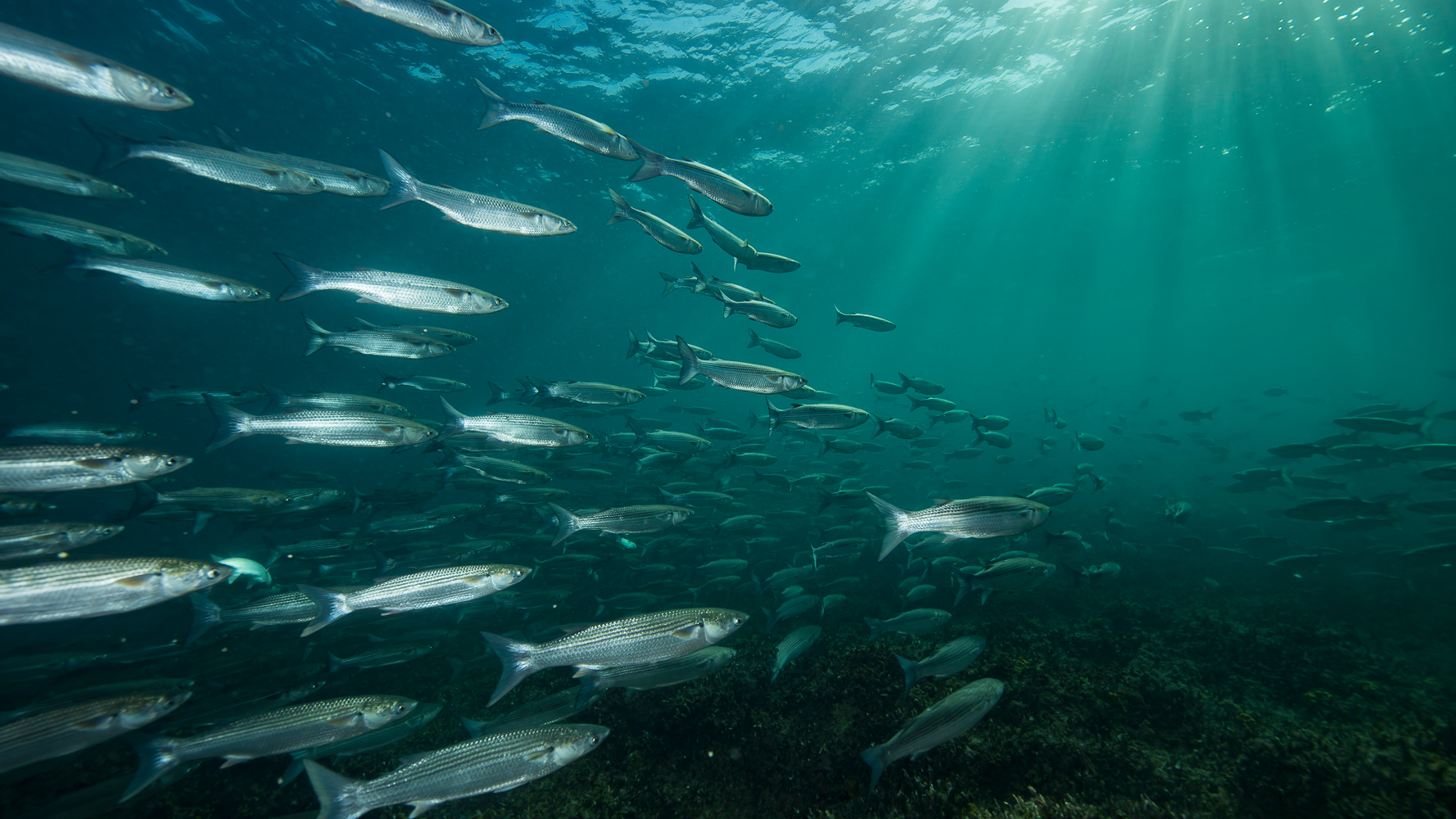 Torre-Guaceto_photo_Giuseppe_Affinito